There’s something incredible about summer BBQs that unites everyone. The scent of coals heating up, the sound of meat hitting the grill, and laughter echoing through your backyard are memories that linger for years. Whether you’re a first-time host or a well-seasoned chef with 1,000 grilled burgers under your belt, there’s more to summer grilling than just turning on the heat and spiking whatever you have in the fridge right onto the grates.
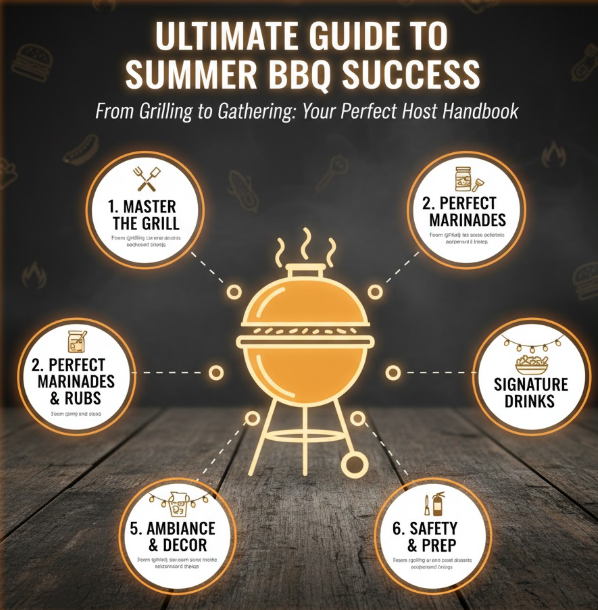
This guide will take you through all there is to know about planning, preparing, and hosting an unforgettable summer BBQ that your friends will rave about for months. From selecting your smoker to finishing with mouth watering flavorful recipes, The BBQ Blueprint is packed full of pro tips that will serve you up a PRO style barbecue! You can literally CHOOSE YOUR OWN DESTINY simply by following this smoking hot book. Let’s get those grills going and make this the summer we can’t forget.
Picking Your BBQ Battle Station
Your grill is the heart and soul of the BBQ operation, so selecting the right one really can make all the difference. Gas grills have the added benefit of being a snap to start and temperature-controllable with burner knobs. They’re great for weeknight dinners and laid-back socializing, when you’d rather focus on guests than scraping together glowing embers. Most gas grills are ready to cook in 10-15 minutes and offer consistent cooking temperatures.
If you’re a fan of the charcoal flavor that only comes with working over a real fire, a char-grill is the vehicle for you. It takes them around 30 minutes to heat up for cooking, but the added process is well worth it in flavor. Charcoal burns hotter than gas, so it’s the best way to achieve those delicate char marks and the depth of sear you want on a steak. The drawback? The temperature control takes some practice, and cleanup is more time consuming.
Pellet grills offer the best of both worlds, using wood pellets to produce wood smoke while at the same time providing digital temperature readouts and control. They are great for the low-and-slow ribs and brisket. But they require electricity to run and are more expensive up front than conventional choices.
And for apartment dwellers or those with little outdoor space, electric grills serve as a convenient option. Even though they won’t replicate the smoky flavors, electric models have come a long way and produce enough heat for good grilling; they can be used on balconies where open flames are not allowed.
Building Your Grilling Toolkit
Because the right tools, in addition to the grill itself, can make all the difference when it comes to how you cook. Long tongs with a very good grip are important for flipping everything from delicate vegetables to a thick steak without singeing your arm hair. You need a pair of spring-loaded tongs, probably around 16 inches long; they give you the reach and control you want.
A big, metal spatula with a wide blade is great for flipping burgers and fish without destroying them. Opt for one with a beveled edge that’s easy to slide beneath delicate items. Grill brushes help to keep your cooking surface clean, but replace them often as loose bristles can wind up in food and create significant health problems.
Invest in a good instant-read thermometer to avoid the guesswork of doneness. Digital models provide readings in seconds, and you can trust that your chicken is cooked through while your steaks are a perfect medium-rare. Heat-resistant gloves shield your hands while adjusting vents or handling hot grill grates, and a chimney starter allows you to light charcoal faster and with more predictability than lighter fluid ever could.
Menu Planning That Actually Works
Developing a balanced menu must take into account cooking times, guest preferences and your own aptitude. Begin where you are most comfortable with protein. The high fat content in chicken thighs makes them more forgiving than breasts when it comes to drying out. Burgers cook fast, are universally pleasing (or at least acceptable) and can be flipped with the ease of a handwave; hot dogs operate as a safety valve that demands almost no work.
Ribs and brisket are impressive centerpieces but require hours of focus and temperature control. Save it for once you have mastered the basics and you want to dedicate some time. Fish cooks quickly but adheres readily to grates, so be sure before adding it to your menu.
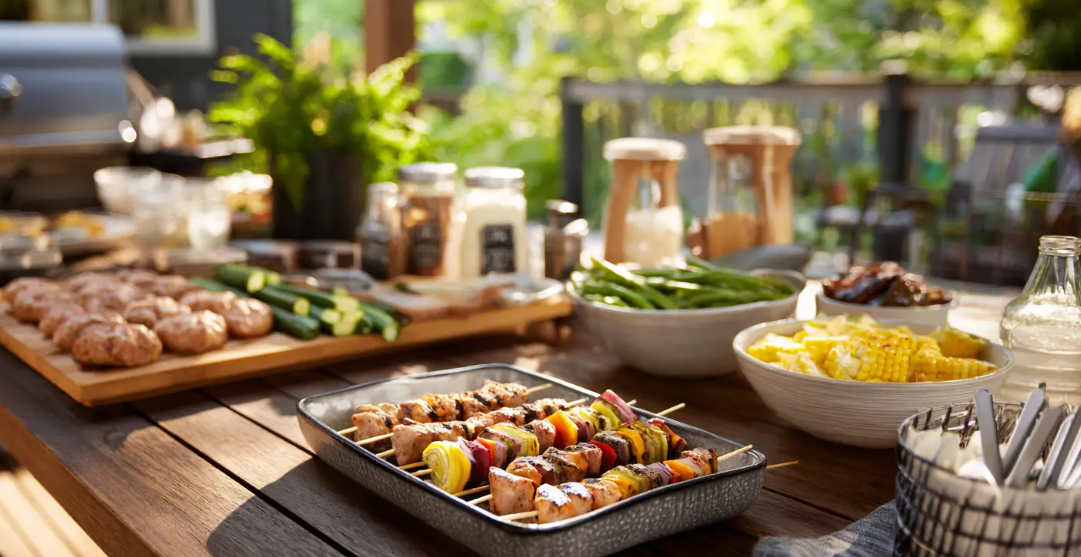
Sides: These should be able to complement the main dishes without taking up precious grill real estate. For a reason: potato salad, coleslaw, baked beans and corn on the cob are BBQ staples. They can be made in advance, taste wonderful at room temperature and don’t vie with your proteins for space on the grill.
Shopping Smart and Prepping Ahead
Whenever you can, shop for proteins two days before the event. This will also give your meat time to fully defrost and allow you to use marinades or dry rubs that need to infuse into the meat. For a party of 10, count on about one pound of meat per person, although appetites differ depending on what else you are serving.
Opt for meats that are well marbled, meaning that streaks of fat run through the muscle. This fat will melt as the chiles cook, basting them and enhancing their flavor. For ground beef, 80/20 (or 80% lean and 20% fat) produces juicier burgers than those made with leaner options that can dry out.
Clean, chop and store vegetables in airtight containers the night before. Thread vegetables onto skewers for quick grilling, alternating the pieces with varying cooking times. Peppers and onions take about the same amount of time to cook; zucchini a little less than mushrooms.
The Temperature Zone System
Knowing your grill temperature zones turns guesswork into science. Bank coals on one side of grill for direct heat, leaving other side empty. Use a two-zone fire: Build a charcoal fire at one end of your grill and once the coals are hot spread them out in an even layer so there is an area along the edge with fewer coals. For gas grills, turn burners on one side to high and leave other side on low or off.
Hot side: Direct heat zones (450-550°F) For fast-cooking items, like burgers, hot dogs and vegetables. The intense heat creates a beautiful, flavorful crust on the outside and cooks the inside evenly. Leave the lid up on foods that cook in less than ten minutes.
Indirect heat zones (225-350°F) deal with bigger cuts which require a longer time to cook. Add chicken, ribs or roasts to the cooler side with the lid down, your grill now an outdoor oven. The food cooks through without burning the exterior, and adding wood chips to the hot side imparts a smoky flavor.
Schedule Your Cook for Easy Stress-Free Serving
Begin with items that have the longest cooking time first, then add foods with the shortest cooking time as you get closer to serving. The following table displays estimated BBQ cook times of popular foods:
| Food Item | Cook Method | Internal Temp | Time |
|---|---|---|---|
| Burgers (1/2 inch thick) | Direct | 160°F | 8-10 min |
| Chicken breasts | Indirect | 165°F | 30-35 min |
| Chicken thighs | Indirect | 175°F | 35-40 min |
| Pork ribs | Indirect | 190-203°F | 3-4 hours |
| Hot dogs | Direct | 140°F | 5-7 minutes |
| Steak (1 inch thick) | Direct | 135°F (medium-rare) | 8-10 min |
| Corn on the cob | Direct | N/A | 10-12 minutes |
| Bell peppers | Direct | N/A | 8-10 minutes |
These times differ depending on grill temperature, weather and the thickness of each individual item. Use a thermometer to check cook time every single time, never based on the physical cooking time.
Flavor Boosting Secrets
Marinades are most effective with thinner cuts and poultry because they can infiltrate the meat, imparting flavor and making it more tender. Acid ingredients such as vinegar, citrus juice or wine tenderize proteins, so marinate sensitive items like fish for 2-4 hours, while harder cuts like flank steak should be left for up to 24 hours.
Dry rubs result in a flavorful crust without adding liquid. Rub them on at least an hour before you cook, or let them sit overnight for stronger flavor. A simple rub is made from equal parts paprika, brown sugar, salt, black pepper, garlic powder and onion powder. Play with ratios depending on if you want sweet, spicy or savory!
Brining makes chicken and pork extremely moist. Mix a quarter cup of salt and sugar with 4 cups water, at those quantities it’s perfectly doable: Just immerse your meat in the solution and leave it in the fridge for between 4-12 hours. Rinse before cooking to avoid results that are too salty.
Wood chips infuse smoky flavor into gas and charcoal grills. Soak them in water for 30 minutes, then put them in a smoker box or wrap them in foil and poke holes into the top. Hickory gives you strong bacon-y flavor while apple and cherry give you a lighter, sweet smoke. Mesquite generates strong flavor that can be too much for delicate meats if overdone.
Managing the Fire Like a Pro
Control heat on charcoal grill with vents. Open vents allow the fire to become hotter by increasing airflow. Close them in part if you desire to reduce temperature. The bottom vent manages the inflow of air while the top controls smoke and heat exiting the grill. Unless you’re done cooking and you’ve put those coals out, don’t ever close both completely.
It’s easier to control the temperature of a gas grill, but still something that you need to pay attention to. Preheat for 15 minutes with the lid closed, then adjust burner to desired temperature. If your grill is running too hot even on low, partially close the lid vent or turn off one burner.
Flare-ups occur when fat drips onto flames, prompting short-lived bursts of fire that singe food. Transfer items to the cooler side of the grill until flames subside, or cover with the lid and allow oxygen to be cut off from fire. It’s good to keep a spray bottle of water handy for emergencies, but use it judiciously — there should not be too much ash on the food.
Guest-Safe Food Safety
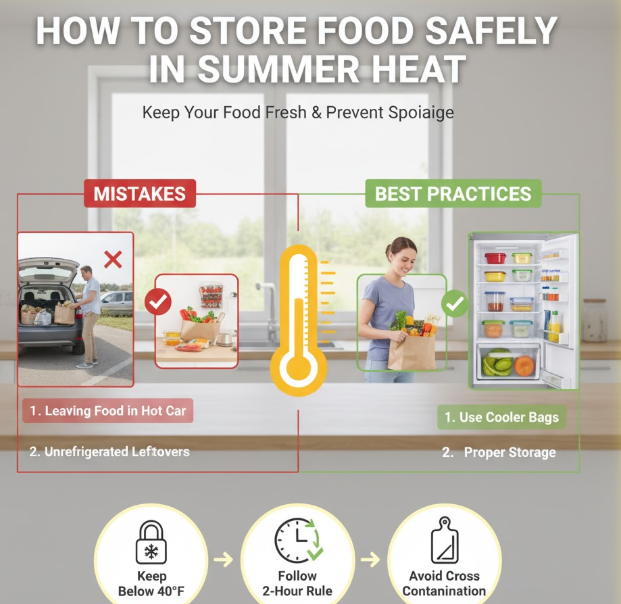
Never let raw meat contact cooked food or serving surfaces. Use different cutting boards and platters for raw and cooked foods, or wash thoroughly between uses with hot, soapy water. That’s where color-coded cutting boards (red for raw meat, green for vegetables, white for cooked foods) come in handy.
If you have any ingredients that are perishable, refrigerate them up until 30 minutes before cooking. When it’s above 90°F, don’t let food sit out for more than an hour. That means potato salad, pasta salad, and all of those mayo-based sides that turn into a breeding ground for bacteria the moment they’re served at a warm temperature.
Cook chicken to 165°F; pork, 145°F and a three-minute rest; ground beef, 160°F. Steaks and whole beef cuts can safely be prepared to an interior temperature of 135°F for medium rare because harmful bacteria reside on the surface that is seared at high heat. For more information on food safety guidelines, visit the USDA Food Safety and Inspection Service.
Setting Up Your BBQ Space
Establish different sections in your outdoor space that are set aside for cooking, serving and eating. Avoid foot traffic in the grill area – there should be at least a 3′ clearance around all sides of the grill. That way you’re less likely to have an accident and there’s space for you to work without bumping into guests.
Place a serving station downwind from the grill so that smoke doesn’t pass over food. Keep sides warm in chafing dishes or slow cookers, and have coolers filled with ice for drinks and cold items. Label dishes that have common allergens (nuts, dairy or gluten).
Shade is key to staying comfortable in the summer. If your yard doesn’t have natural cover, consider renting a pop-up tent or canopy. Hang the cloths — but over an eating area, not your grill, which will fill a closed space with life-threatening carbon monoxide. Include outdoor fans to help with air circulation and to repel bugs.
Drink Stations Done Right
A self-serve drink station ensures you stay focused on grilling and not playing bartender. Load up large drink dispensers or coolers with ice and choice of beverage (have adult and kid-friendly varieties). Throw some fresh fruit into your water such as lemon slices, strawberries or cucumber for a refreshing enhancement.
Stock your house with more beverages than you think is reasonable. The hotter it is, the more people drink; and if you run out, things get awkward. Budget 2-3 drinks per person for the first hour and 1-2 drinks per hour thereafter. Extras can be stored in a garage refrigerator or packed in ice-filled coolers.
Create a bucket by filling a large container with ice, water and salt. The salt reduces water’s freezing point and chills bottles more quickly than with ice alone. Wine remains cold in ice bucket with water to assure as much surface contact as possible with the bottle.
Entertainment Beyond the Food
Music fades in the background without loud conversation. Create a playlist that goes 30 minutes beyond your scheduled end time and keep the volume so people sitting ten feet apart can talk at a normal level. Bluetooth speakers are fine outdoors, just not right next to the grill or a pool of water.
Lawn games also provide guests with something to do while the food cooks. Cornhole, ladder toss and giant Jenga thrive since they’re easy for people to drop into or leave mid-game without spoiling the play. Create game zones away from eating spaces to prevent accidents.
For family attendees with kids, consider setting up a play area that includes activities for a variety of ages. Bubbles, sidewalk chalk and a sprinkler are hours of fun that also ensure kids remain visible and safe.
Weather Backup Plans
Monitor forecasts three days in advance and have backup plans on hand. For rain, a large tent or covered patio has the party covered. Never take the grill under an overhead structure unless there is proper ventilation and clearance overhead — grills emit carbon monoxide and extreme heat that can damage structures.
Cooking times and temperature control are influenced by wind. Point your grill crosswise to the wind instead of directly into it. Wind that comes directly at the grill interferes with temperature control, and wind hitting against the side produces hot spots.
Food and drinks will store fresher, with more ice in cooler. Think about shifting your start to later in the afternoon when it’s cooler. Have sunscreen and bug spray on hand for guests, as well as misting fans if you have them.
Quick and Easy Clean Up
Line serving trays with foil for easy clean up. Designate a station with labeled bins for trash, recycling and compost. Put bags in bins so you can just tie and pull them out when full.
Brush grill grates clean while they are still warm with a grill brush. The heat will help loosen any stuck-on food, which makes the task much easier than after everything cools and hardens. If the residue is tougher, crumple up a ball of aluminum foil and use tongs to scrub grates clean.
Drop dirty utensils and platters into warm, soapy water as soon as they’re used. No more chipping away at cemented-on leftovers and reduces your post-party scrubbing time by half. Enlist a few willing hands to do dishes as you clean up the grill.
Special Situations and Dietary Needs
Vegetarian guests deserve more than sad veggie skewers as an afterthought. Portobello mushrooms, marinated and grilled, function as hefty burgers. Grilled halloumi cheese gets crusty on the outside but remains creamy within. Veggie packets of seasoned vegetables cooked in foil on the grill are a great last minute side dish.
For vegan alternatives, try marinated tofu steaks, which absorb great flavor and get some nice color from the grill. Beyond and Impossible burgers grill just like beef, lending a familiar option for plant-based eaters. Stash vegetarian items in another part of the grill so they don’t touch meat.
Gluten-free guests require their own serving utensils for sides and clearly marked options. Most BBQ meats are naturally gluten-free, but sauces may use wheat-based thickeners. Offer buns made of gluten-free and lettuce instead.
Budget-Friendly BBQ Strategies
Feed a crowd without breaking the bank with these cost-effective cuts of meat. You pay way less for chicken leg quarters than breasts and they taste fantastic grilled. Pork shoulder becomes pulled pork that will feed a crowd for cheap. Ground beef goes a bit farther if you serve sliders in place of regular-size burgers.
Buy sale items and in bulk from warehouse stores. Wrap up any leftover meat in portion-sized packages and freeze for later BBQs. Forget name brands of condiments, chips and paper goods; generic is virtually indistinguishable and as much as 50% cheaper per person.
Prepare sides from scratch rather than purchasing prepared ones. Deli potato salads can be twice as expensive, and lack fresh flavor. Rice and beans are budget-friendly accompaniments that are also easy on the stomach, pairing well with barbecue.
Frequently Asked Questions
How Long Should I Preheat My Grill Before Cooking?
Gas grills should preheat with the lid down for 15 minutes to reach desired cooking temperature. Charcoal grills need about 30 minutes after they’re lit for the coals to take on that gray ash coating that lets you know they’re ready. Good preheating will give even cooking and help avoid food sticking to grates.
What is the best way to know when meat is done without cutting it?
Keep an instant-read thermometer in the meatiest part of the meat, away from any bones. This allows for accurate readings without losing juices as cutting would. Same for steaks, the touch test works too: Rare meat is soft like the fleshy part of your palm just below your thumb when your hand’s relaxed; medium feels like that same area when you’re making a fist (thumb to middle finger); and well-done is firm.
Why is my chicken always dry?
Fattier thighs can be more palatable than breast because the latter is relatively lean. Cook it over indirect heat with the lid closed instead of direct grilling, and pull chicken off when it hits 165°F — no more. Let it sit for 5 minutes before carving. Using chicken thighs or brining the meat ahead of time can also help to keep moisture in.
How can I get ready for a barbecue the day before?
Absolutely. Marinate meats, chop vegetables, prepare sides and combine dry rubs the night before. Simply keep all of it nice and cool in appropriately labeled containers. The only exception would be if you cut raw vegetables on the same board as raw meat but without thoroughly cleaning it in between. This advanced prep, he notes, will reduce the stress on the day of your event.
How can I keep burgers intact on the grill?
Take it easy on ground meat as you shape the patties; you don’t want to pack it down too tightly. Make a small indent in the middle of each patty with your thumb — this will help your burgers from puffing up into balls while they cook. Only flip burgers one time, when they have developed a crust and slip easily from the grates.
What do I do if my grill catches fire?
Close the lid briefly to starve flames of oxygen if a small flare-up from dripping fat occurs, transferring food into a cooler part of the grill. To douse down a grease fire on the bottom of the grill, close all vents and also the lid, to put out flames — never throw water on a grease fire. Have a fire extinguisher in close proximity approved for oil fires and know how to operate it before emergencies arise.
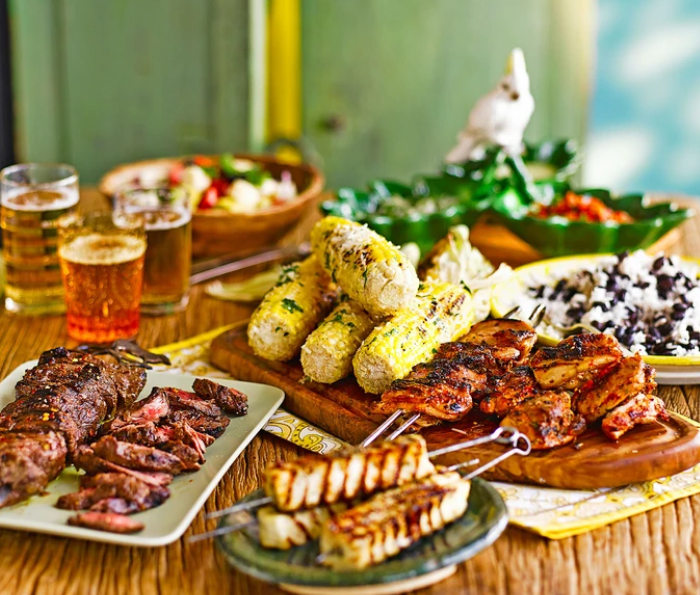
Conclusion to Your BBQ Success Story
There are a few things that go into hosting a great summer BBQ. Preparation, technique and enjoying what you’re doing. Begin with equipment and recipes that are appropriate to your skill level, then step up as you become more confident. Concern yourself with food safety and cooking temperatures, and keep everyone safe.
The greatest BBQs are the ones where the host enjoys themselves, not agonizes over making things perfect. Your guests are going to remember the laughter, good company and experience more than if every single burger was cooked to exactly the same shade of pink. So use this guide as your base, modify some of the suggestions to fit with what you can do and keep on practicing throughout summer. It won’t be long before you’ll have your own special technique and style that will bring them back to your backyard year after year. Now go, and create some delicious memories.